
By the time the first case comes off the board, the room is staffed, supplies are set out, and the patient may already be on the way. If the problem was a missing record or an unconfirmed ride home, yesterday's schedule is where I'd start looking.
Start with the cancellations you could see coming
Pull the last month of day-of-surgery cancellations. For each one, write down what stopped the case, when someone first knew about it, and how much time the team had to act. Start with one reason your center sees repeatedly. Maybe patients arrive without a confirmed escort, or the surgeon's office sends records after the last nursing review.
A University of North Carolina ambulatory surgical center reported fewer same-day cancellations after nurses used pre-op calls to address common causes and shared concerns with the appropriate team. Use your own case history to decide which problems to tackle first. Published UNC study
Give the open item a person and a deadline
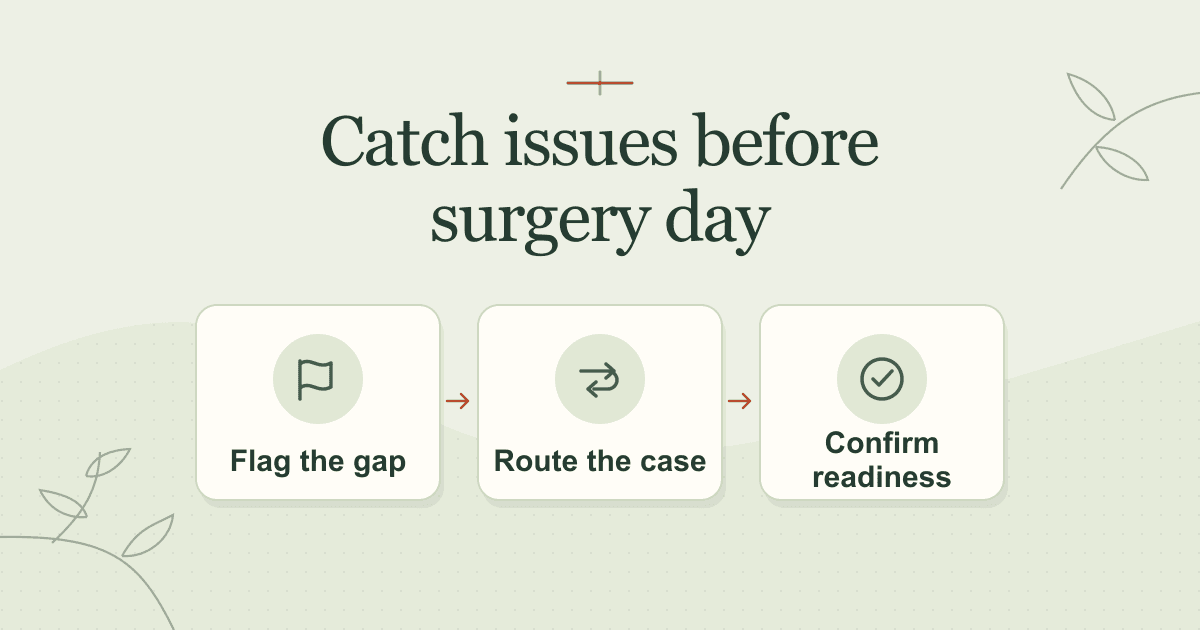
At the next schedule huddle, try reading tomorrow's cases with an open item out loud. “Waiting for records” could mean three people are chasing them, or everyone thinks someone else is. “PAT nurse to check with the surgeon's office by 2 p.m.” gives the team a next step.
This is the part we're building at Incerto. A pre-op call captures what the patient says about preparation, medications, or transport. The nurse gets a summary that shows what's still open, so they can decide what needs follow-up while there's time to act. Our pre-admission testing (PAT) workflow map shows where that handoff fits.
Measure what happened to the room
Use the same cutoff and scheduled-case denominator each week. Track same-day cancellations by reason, earlier moves, and whether the released slots were filled. Moving a case earlier helps the schedule when another patient can use the slot. Keep that count alongside cases that went ahead as originally planned.
If missed contacts are a common thread in your review, start with what to track when patients miss pre-op calls. Then see how Incerto surfaces open issues in a pre-op call.