

A Paid Claim Is Not Always a Correct Payment.
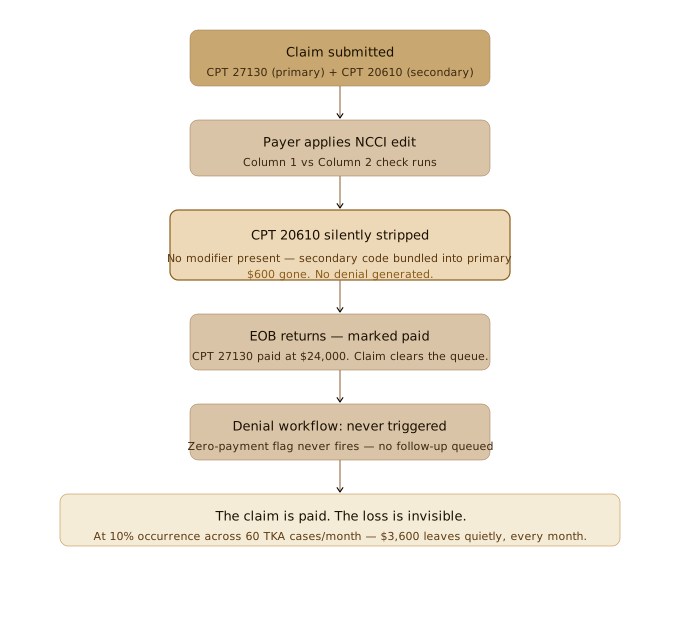
A billing manager at an orthopedic ASC pulls up the EOB on a total knee arthroplasty. CPT 27130 is paid at $24,000. The claim is marked paid, no denial flag, no follow-up queue, and the manager moves on.
What the EOB does not show is that CPT 20610, the arthrocentesis the surgeon performed on the same day, was stripped entirely. This is NCCI bundling at work. The National Correct Coding Initiative has rules that treat certain procedure combinations as a single service, and when two codes on the same claim fall under those rules, payers pay the primary code and drop the secondary one completely.
The modifier that would have told the payer these were two distinct procedures was never appended, and the payer bundled the secondary code into the primary without flagging it. The contracted rate for CPT 20610 was $600.
That is one case, $600 short, marked paid, and completely invisible to the denial workflow. At 60 total knee cases a month, if 10% of them have this combination, that is $3,600 leaving every month without a single denial being generated.
Why Your Variance Report Is Not Catching This.
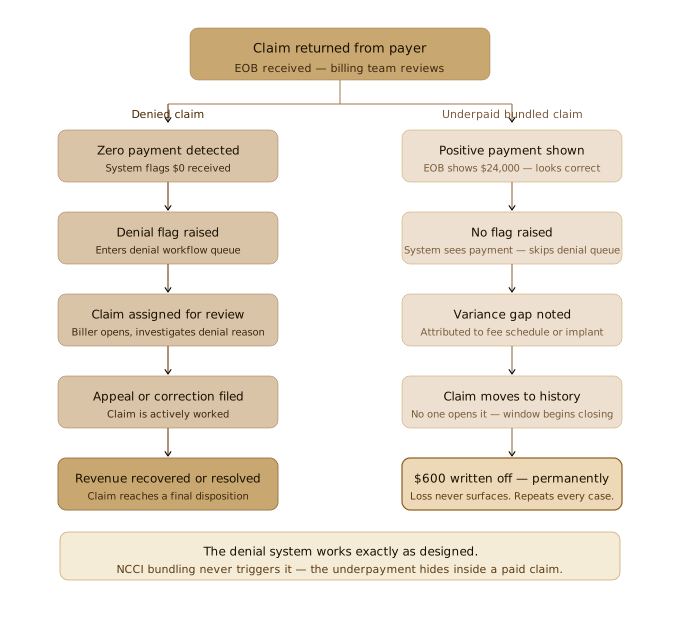
Most billing teams are built around denials. Zero payment triggers a flag, someone opens the claim, and it enters the follow-up queue. That system works exactly as intended, for denials.
NCCI bundling does not produce a denied claim. It produces a paid claim that is short. The EOB shows a positive payment, the claim clears the queue, and the variance report sees a small gap that gets attributed to a fee schedule adjustment or an implant not captured. The actual cause, which is a missing modifier, never surfaces.
Industry data shows that 70% of underpayments are only identified through methods beyond the standard variance report. At a $5M orthopedic ASC, that is roughly $35,000 in bundling-related underpayments.
What Is Actually Happening Inside These Claims.
NCCI edits work on a column structure. The primary procedure is Column 1 and gets paid in full. The secondary procedure is Column 2 and gets stripped unless a modifier tells the payer that the two procedures were genuinely distinct. Modifier 25 and Modifier 59 are the two most common solutions in orthopedic billing, and when applied correctly with supporting operative documentation, they allow the secondary code to be paid separately.
The problem runs deeper than just missing modifiers. Certain NCCI edit pairs carry a Modifier Indicator 0, which means no modifier can override the bundling. Those codes will always bundle regardless of what documentation exists. Beyond that, payers like UnitedHealthcare systematically strip Modifier 59 even when it is correctly applied, which means the same claim needs a different modifier strategy depending on who the payer is.
Bilateral procedures create a separate problem entirely. Many ASCs still bill bilateral cases using Modifier 50, but Medicare ASC rules require RT and LT split billing instead. When Modifier 50 is used incorrectly, the payer applies a payment reduction and reimburses one side at 50%.
A bilateral total knee case that should pay $48,000 ends up paying $36,000, and the claim still shows up as paid.
This is not a one-time fix. It is a payer-by-payer, procedure-by-procedure problem that compounds quietly across every claim.
What This Costs and What We Do About It.
Across bundling errors, missing modifiers, and bilateral billing mistakes, a representative $5M orthopedic ASC is losing between $136,000 and $278,000 annually in underpayments that never generate a denial and never get worked.
We built Incerto to go after exactly this. We scan EOBs line by line, identify the modifier stripping patterns specific to your payer mix, and flag the bundling errors that your variance report is attributing to something else. We also run pre-submission checks so these errors stop happening on new claims while we recover what was lost on old ones.
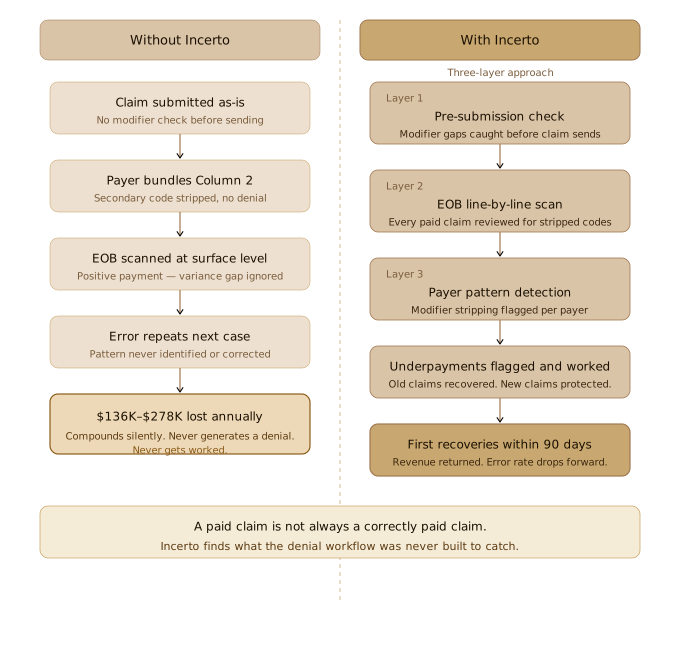
Most centers we work with find their first recoverable underpayments within the first 90 days. A paid claim is not always a correctly paid claim, and in orthopedic billing, that difference becomes expensive very quickly.
If you suspect this is happening at your center, we would like to show you what it looks like in your own claims.
Frequently Asked Questions
- What is NCCI bundling and how does it affect orthopedic ASC billing?
NCCI bundling rules treat certain procedure combinations as a single service, so payers reimburse the primary code and drop the secondary one without generating a denial. Most orthopedic ASCs do not realize this is happening because the claim still shows up as paid. Incerto identifies these patterns across your entire claim history.
- Why are orthopedic ASCs losing revenue on claims that show up as paid?
Most billing teams are built to catch denials, not underpayments. When a claim comes back short rather than at zero, it clears the queue and nobody works it. Incerto was built specifically for this gap, recovering revenue that standard denial workflows never touch.
- What is the difference between Modifier 25 and Modifier 59 in orthopedic billing?
Both modifiers tell the payer that two procedures on the same claim are genuinely distinct, but they communicate different things and payers treat them differently. Using the wrong one, or missing both, costs you the secondary reimbursement entirely. Incerto tracks payer-specific modifier behavior so the right modifier reaches the right payer every time.
- How much revenue does an orthopedic ASC lose annually to NCCI bundling errors?
More than most administrators expect. A representative $5 million orthopedic ASC loses between $136,000 and $278,000 annually on underpayments that never generate a denial. Incerto typically surfaces the first recoverable amounts within the first 90 days.
- Why do variance reports miss NCCI bundling underpayments?
Because the claim is not at zero. The primary code pays in full, the gap looks like a rounding adjustment, and the root cause never surfaces. Industry data shows 70% of underpayments are only found through methods beyond the standard variance report. That is the problem Incerto solves.
- What is the correct way to bill bilateral procedures at an orthopedic ASC?
Medicare ASC rules require RT and LT split billing rather than Modifier 50. When billed incorrectly, the payer reduces one side to 50% and the claim still shows up as paid. Incerto catches these errors in pre-submission validation before they cost you anything.
- How can revenue cycle automation help orthopedic ASCs recover NCCI bundling underpayments?
Revenue cycle automation gives billing teams the visibility that manual workflows cannot scale to. Incerto scans EOBs line by line, maps payer-specific bundling behavior, and runs pre-submission checks so errors stop repeating. The revenue was always there. It just needed the right system looking for it.