

The Denial That Had Nothing to Do With the Surgery
A spine patient clears every clinical threshold. A board-certified surgeon recommends surgery. Conservative care is documented. The patient has been compliant through every follow-up. The case is scheduled.
Then the prior auth comes back denied.
Not because the surgery was wrong. Because six weeks of physical therapy was not documented in the format the payer required. The PT happened. The patient did the work. The paperwork just did not land the way the algorithm needed it to.
The OrthoCarolina Research Institute reviewed more than 7,000 spine patients and found that 30% of all denials came down to exactly this.
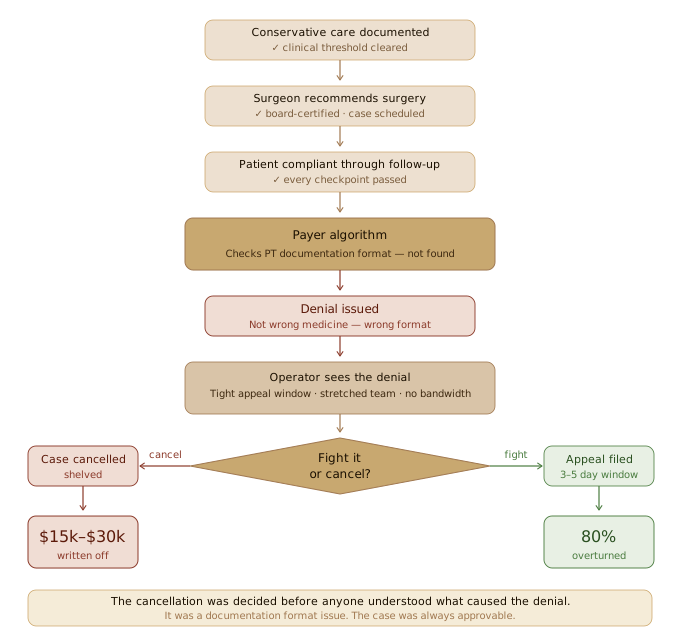
The case gets delayed. The team builds an appeal. The surgeon pulls out of clinical time to argue a case the clinical evidence already won. Three months later, 80% of those appeals get overturned. The ones where the window closed while the team was still figuring it out are gone for good.
That is not a denial problem. That is a documentation pattern that nobody caught in time.
When I Looked Inside These Cancellations, Here Is What I Actually Found
The OrthoCarolina Research Institute reviewed more than 7,000 spine patients. 460 were denied nearly 7% of cases that were clinically cleared and surgeon-recommended.
Most operators treat a cancelled case as a judgment call. The prior auth came back denied, the appeal window is tight, the team is stretched, so the case gets shelved. What looks like a resourcing decision is actually a documentation failure that happened weeks earlier and nobody caught it.
| Prior Auth Denial Reason | Share of Cases | Reality |
|---|---|---|
| Missing PT documentation | 30% | The patient had completed therapy. It was never submitted correctly. |
| Deemed not medically necessary | 26.5% | Reviewer decision based on incomplete documentation, not clinical judgment. |
| Appeals overturned | 80% | The case was always approvable. The cancellation was a documentation problem. |
The Cost Nobody Calculates
When a case gets cancelled after a prior auth denial, most operators move on. The appeal window is tight, the team is stretched, the case gets shelved.
A single denied spine case is $15,000 to $30,000 in lost facility fee revenue. Only 11.5% of prior auth denials ever get appealed despite 80% of those appeals being overturned. The rest get written off, only because nobody caught the pattern in time.
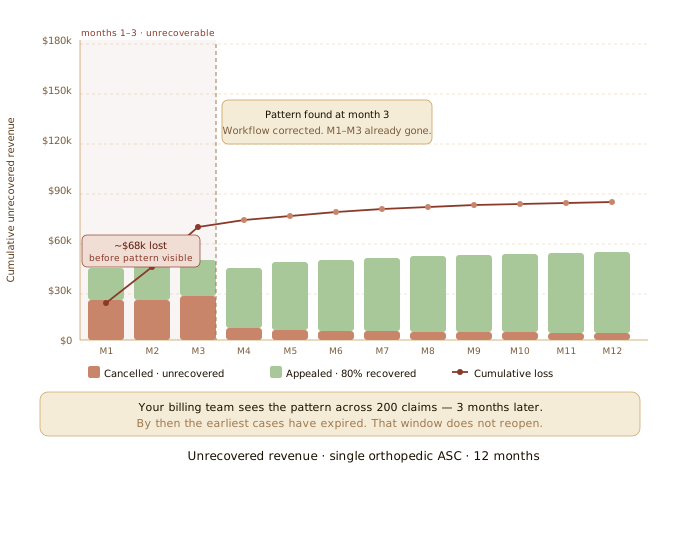
Your billing team sees the denial across 200 claims, figures out the PT documentation gap three months later, and corrects the workflow. By then the earliest cases have expired.
Same Case. Same Denial. One Gets Cancelled. One Gets Recovered.
Incerto takes the denied claims that your team does not have bandwidth to work, pulls the clinical documentation, and builds complete payer-specific appeal packets. It learns from every outcome, mapping what arguments work with which payers, for which procedures. The appeals that your team wrote off as unrecoverable are the ones we go back for.
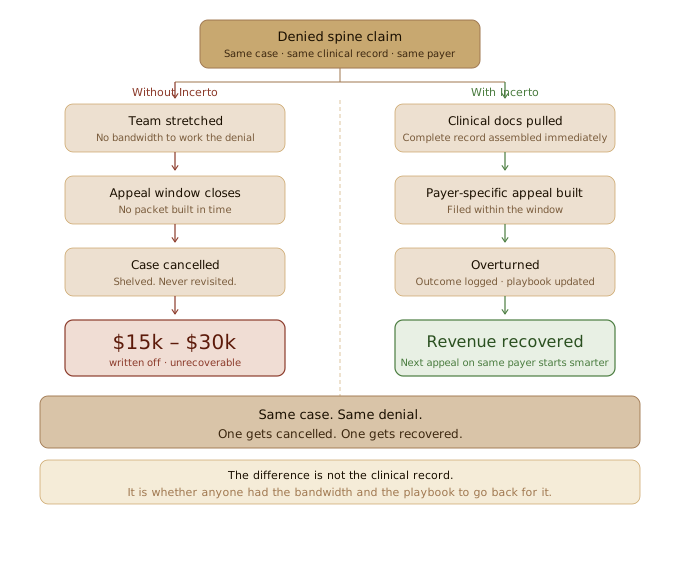
The difference is not the clinical record. It is whether anyone had the bandwidth and the playbook to go back for it.
No case gets unreasonably cancelled with Incerto.
If This Is Happening at Your Center, We Should Talk
Prior auth denials are not going to get easier. Payers are tightening criteria, authorization requirements are expanding, and the appeal window keeps shrinking.
The cases being cancelled today because of a documentation gap are recoverable. Most centers just do not have the bandwidth or the visibility to go back for them.
If you are sitting on a denial backlog from prior auth cancellations and suspect the problem is bigger than your team can see, we would like to show you what this looks like in practice.